 Shipped today
New Year’s Resolution: Better Sleep
- Jun 15, 2026

“From now on, I’m going to go to bed on time every night.” Sounds great – but in a busy life, it’s often harder than it seems. Work, family, screens, to-do lists: before you know it, it’s late again and sleep feels more like a struggle than relaxation.
We believe in the power of 1% per day. Instead of overhauling your entire sleep rhythm at once, you work with small, achievable adjustments: a calm start to the evening, a little less screen time, a fixed little ritual before going to bed. These mini steps are easier to maintain and help you build a sleep routine that fits your life better.
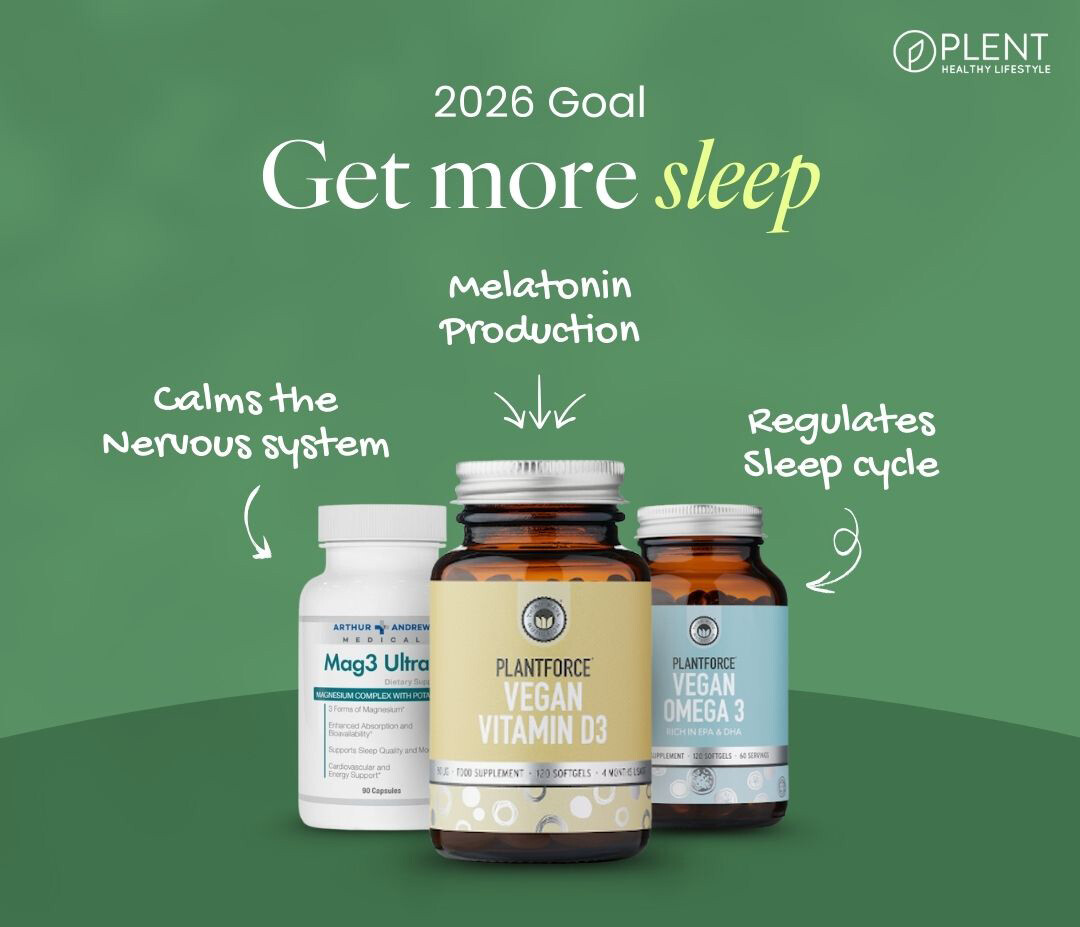
Start Your 1%-per-day-routine
Sleep is influenced by many factors: daily rhythm, stress, light, screens, nutrition, movement and more. The 3-month plan below is not medical advice, but an example of how you can work on your sleep habits with small steps.
Important: have you been experiencing severe sleep problems for a longer period, are you hardly sleeping at all, or are you extremely sleepy during the day? Always contact your GP or another professional.
Goal: creating more predictability in the evening and lowering the barrier to going to sleep.
Possible 1% actions:
-
Choose (roughly) one fixed bedtime
-
Pick a time when you would usually like to be in bed and try to stay close to that 4–5 days a week.
-
It doesn’t have to be perfect; a guideline already helps.
-
-
Mini evening ritual (5–10 minutes)
-
For example: have a drink, wash your face, put on your pyjamas, lay out your things for tomorrow.
-
Doing the same sequence each time gives your brain a signal: “the day is winding down.”
-
-
Build in a screen “brake”
-
Start with a small step: for example, the last 15–30 minutes before going to sleep, no social media or email.
-
Choose something light to do instead: a book, calm music, a short chat, some stretching exercises.
-
-
Observe your sleep hygiene, don’t change it right away
-
For one week, just write down: what time you go to bed, what time you get up, how often you wake up.
-
No judgment, just information. This helps you choose realistic 1% steps.
-
Goal: strengthening small habits and expanding them step by step.
Possible focus points:
-
Fixed “evening start”
-
Choose a time when your evening “officially” starts to wind down, for example one hour before bed.
-
From that moment on: dim the lights a bit, finish heavy tasks and don’t start any big new ones.
-
-
Further limiting screen time (if possible)
-
Gradually extend your screen-free period around bedtime (for example, add 10 minutes each week).
-
Or choose 1–2 fixed moments in the evening when you do not look at your phone.
-
-
Daylight and movement during the day
-
Try to go outside at least once a day, even if it’s just for 5–10 minutes.
-
Short walks during the day can help you feel a clearer distinction between day and night.
-
-
Small caffeine check
-
Take a look at what times you consume coffee, cola, energy drinks or strong tea.
-
A 1% step could be: after a certain time (e.g. 3 p.m.), swap caffeine for water or herbal tea.
-
Goal: maintaining what works, giving space to rough nights and avoiding an “all or nothing” mindset.
Possible steps:
-
Weekly sleep reflection (5–10 minutes)
-
How did your sleep feel over the past week?
-
Which habits helped, which didn’t?
-
Formulate one small adjustment for the coming week (not a whole list).
-
-
Plan for a bad night
-
Decide in advance what you’ll do if you’re lying awake:
-
for example, get out of bed for a bit, read a calm book, have something to drink, and then try to sleep again.
-
-
Having such a plan often feels calmer than thinking “I must sleep now”.
-
-
Boundaries around work and stimulation
-
For example:
-
no work email after a certain time
-
no heavy or complicated conversations right before bed
-
a short “closing ritual” for work (write down your to-do’s for tomorrow, close your laptop, done).
-
-
1% mindset: one bad night doesn’t mean your plan has “failed”. What matters is that the next day you take another small, gentle step toward your sleep rhythm.
An important nuance with 1% per day
-
1% is relative: for one person that’s 5 minutes a day, for another it’s 20 minutes, depending on where you are right now.
-
Doing nothing also counts: skipping a day and then picking it up again is still a form of 1% thinking – you’re picking up the thread again instead of giving up altogether.
-
Listen to your body: in case of doubt or complaints, it is always wise to consult a doctor.

Supportive supplements







Supportive supplements within this theme
A calm evening and a pleasant sleep routine are linked to several factors: regularity, light, screen use, expectations, relaxation, movement and nutrition. Some people also choose to include certain supplements in their daily or evening routine. Within this theme, you’ll find products featuring magnesium, B-complex, omega-3, vitamin D3, lion’s mane, chaga, AHCC and vitamin C.
The information below is general and intended for orientation. It does not constitute medical claims. Always follow the label instructions and consult a qualified professional if you have questions about complaints or symptoms.
Magnesium
is a mineral that is found in various foods, such as green vegetables, nuts and wholegrain products. Some people choose a magnesium supplement as part of their daily routine. Always check the label and take supplements according to the recommended dosage.
Vitamin B-complex
: A B-complex contains several B vitamins in a single supplement. B vitamins occur naturally in many foods, such as wholegrain products, legumes, meat, fish, eggs and dairy.
A B-complex is sometimes used by people who want to top up their intake of B vitamins in a clear and convenient way, always within the recommended amounts.
Omega-3
Omega-3 occurs naturally in oily fish and certain plant-based sources (such as flaxseed oil and some algae). People who eat little of these foods sometimes choose an omega-3 supplement (for example fish oil or a plant-based alternative) as part of their daily intake.
Vitamin D3
is partly produced in the skin under the influence of sunlight and is present to a limited extent in food. In some situations, people choose a vitamin D3 supplement, for example in the darker months or when they spend little time outdoors. Always follow the dosage instructions and any advice from a professional.
Lion's mane
(Hericium erinaceus) is a mushroom that you often find in supplement form as a powder, capsules or extract.
Within the supplement category, lion’s mane is included in various products that people use as part of their personal routine.
Chaga
is a mushroom that naturally grows mainly on birch trees in colder regions.
In supplement form, chaga is often processed into powder, capsules or extract. Some people choose chaga as part of their daily routine, for example mixed into a warm drink like coffee.
AHCC
(Active Hexose Correlated Compound) is an ingredient obtained from certain parts of mushrooms, often related to shiitake.
It is used in various supplements. Anyone who wants to use AHCC is advised to read the label carefully and, in case of doubt, seek advice from a qualified professional.
Vitamin C-complex
contains vitamin C, sometimes in combination with other nutrients. Vitamin C occurs naturally in many vegetables and fruits, such as citrus fruits, berries and bell peppers.
Some people choose a C-complex supplement as a practical addition to their diet. The same applies here: read the label and stick to the recommended dosage.


